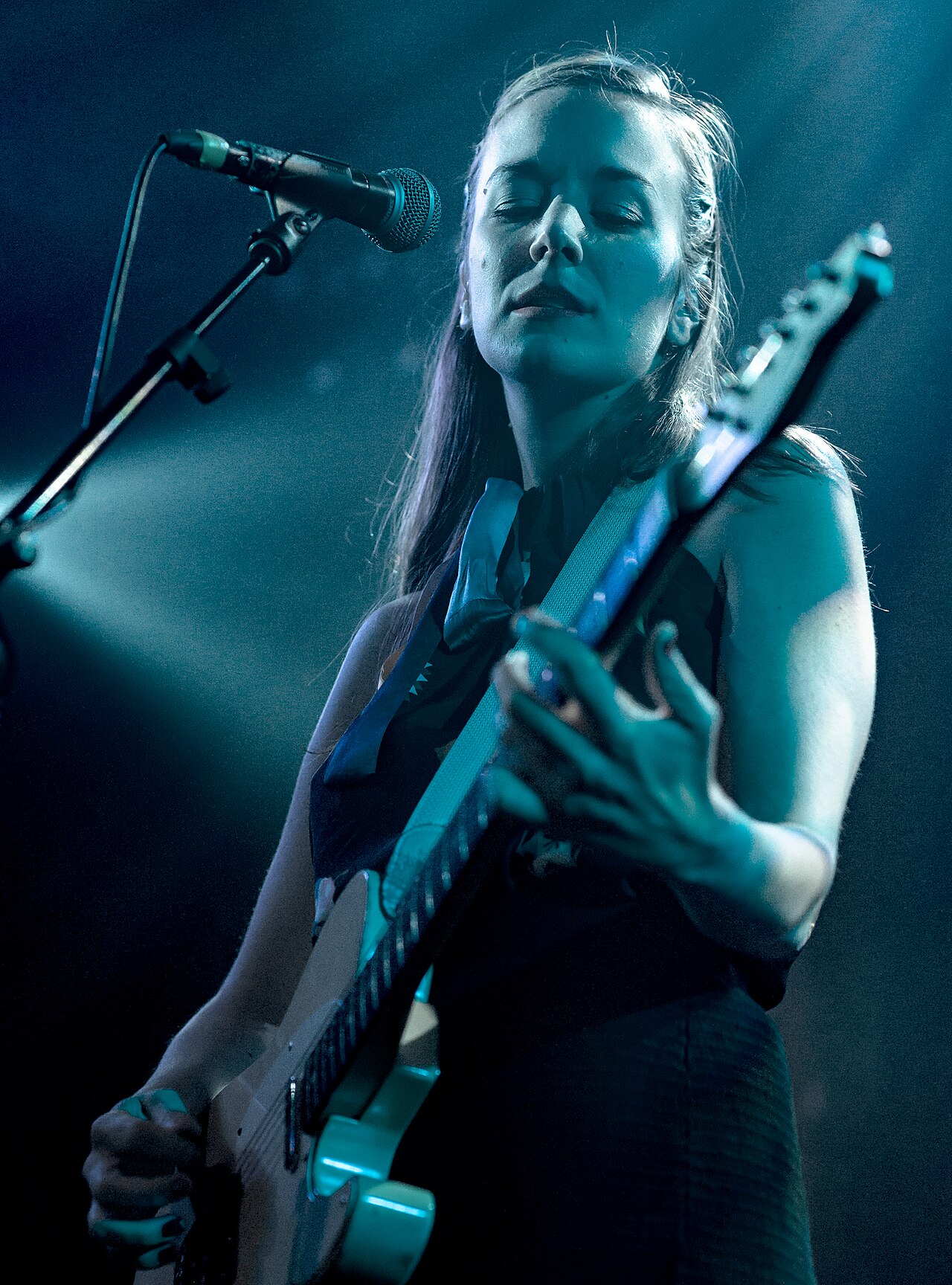
Michigan is a perfectly plausible place to run away to after a breakup. Margaret Glaspy makes that escape the opening story on I Am Both: a New Yorker imagines leaving the city and its complications for somewhere that might be easier. A change of address is an excellent fantasy when the alternative is remaining the same person in the same room.
Glaspy says Michigan began with a visit she enjoyed and became a fictional departure. The eleven songs on her 2026 album draw on invention, observation and personal material. The distinction gives her room to write a convincing escape without asking the listener to treat the character’s plans as an announcement about her own life.
Joe Henry produced the record over three days at Reservoir Studios in New York. Jay Bellerose played drums and percussion, Patrick Warren keyboards and Ross Gallagher bass. Much of the album, Glaspy says, uses first takes. The writing took longer: she worked in longhand, revised on a typewriter and stopped using social media while getting the songs together.
Chris Taylor’s Best Fit review of Echo the Diamond welcomed its bluesier guitar attack after the electronic direction of Devotion. I Am Both changes the ensemble again. Henry’s production and the short session place the new writing with Bellerose, Warren and Gallagher, whose performances have to accommodate songs Glaspy developed over a much longer period.
The woman in the title track earns Glaspy’s admiration for containing contradictions; Michigan gives another character a possible departure. The typewriter and first-take accounts describe two different kinds of care: time spent revising the writing, then a session open to what the players do with it. She has worked on these people long enough to let them behave differently from their author.