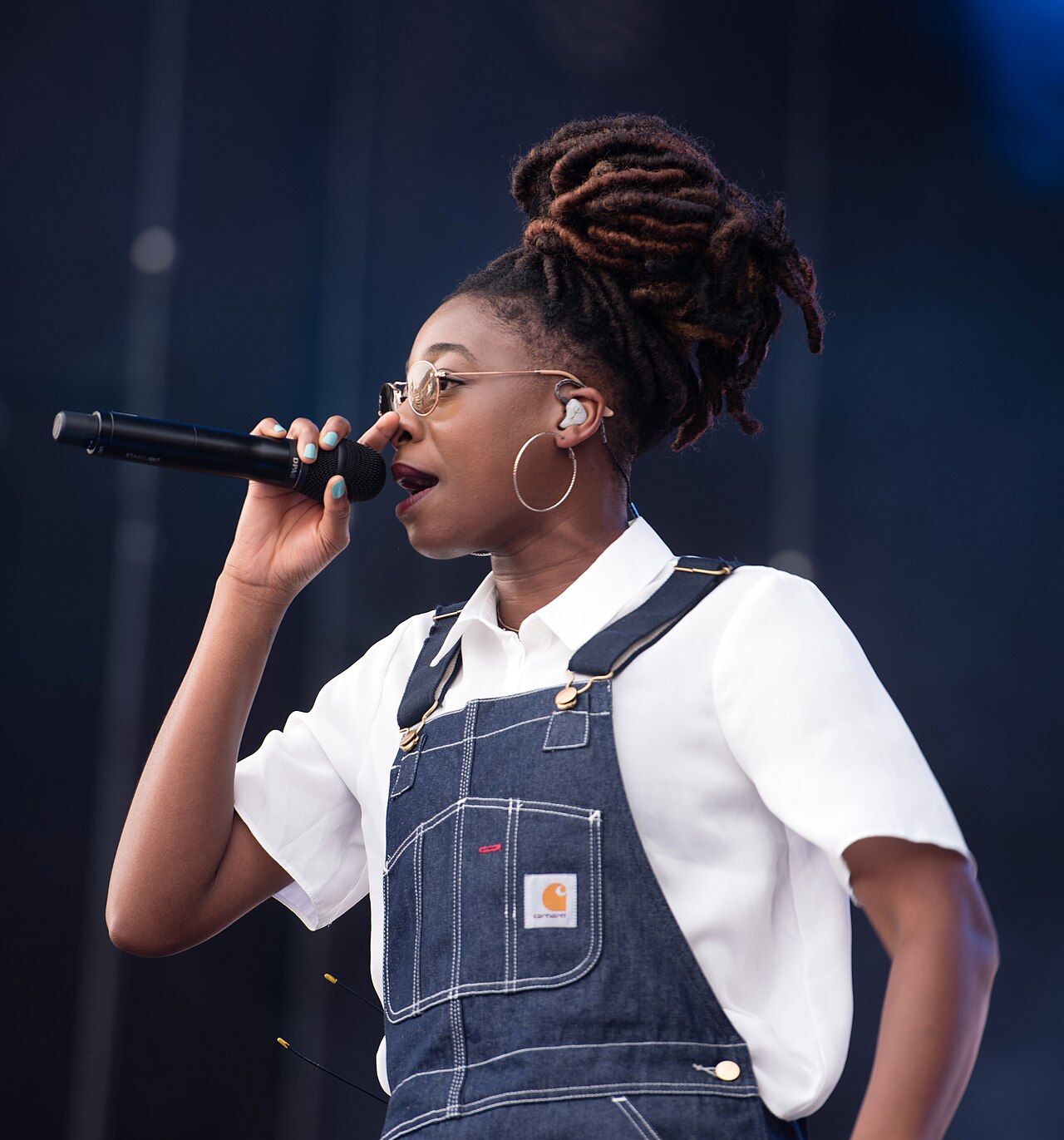
Thief opens Little Simz’s Lotus; Blue, featuring Sampha, closes it. Between them, her sixth album brings a large group of collaborators into songs concerned with betrayal and self-doubt. Released in June 2025, it puts a surprisingly communal working arrangement around a personal subject.
Miles Clinton James guides the production. Obongjayar and Moonchild Sanelly join Flood, while Michael Kiwanuka and Yussef Dayes appear on the title track. These are distinct combinations of singers and players, with different roles across the thirteen tracks. Simz keeps changing who participates in the account rather than sustaining a single musical setting.
DJ Mag’s Akili Viveca Lee hears distinct characters in Simz’s delivery: punk guitar provocation on Young, a looser jazz setting on Only, family friction in Blood. That last track brings in Wretch 32 and Cashh. The changes in company and tone give the album more emotional movement than a single, unbroken declaration of strength could manage.
Lee also describes a softer, more candid delivery on Free, Hollow and Lonely. That contrast matters alongside the defensive Flood: anger is one response available to Simz, without becoming the only position she has to maintain. The record has room for doubt without treating it as a loss of authority.
Sampha joins Blue at the end. After a record so concerned with betrayal, the choice to keep inviting people in is worth more than another declaration of independence. Simz can be furious and still want company. That makes the guest list feel like a decision about how to carry on, rather than a list of famous friends.